Rehearsal of Taiwan Strait Scenario in Distant Waters: Beijing Rewrites Security Order in South Pacific
China Times Opinion, July 8, 2026
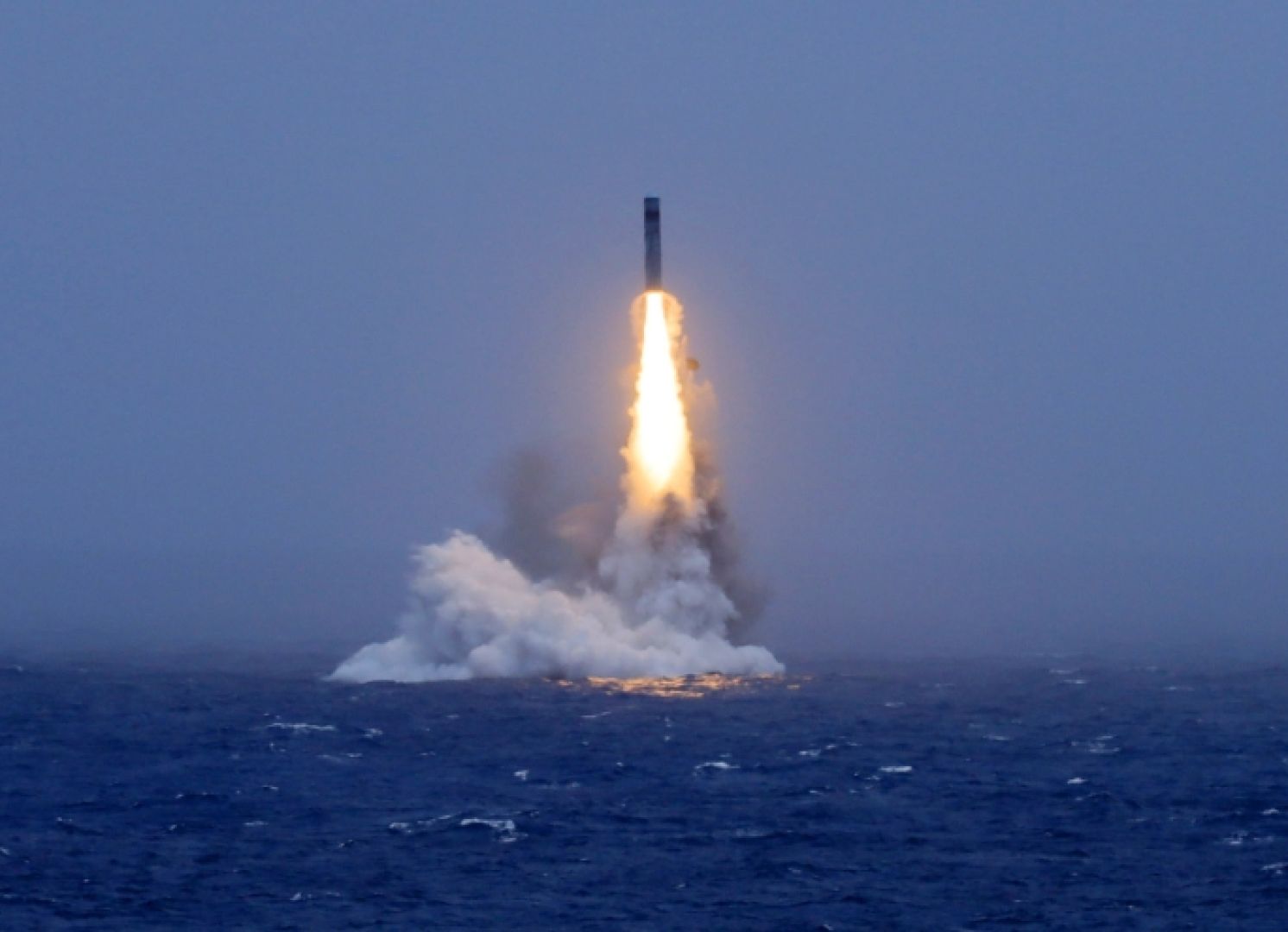
At noon on July 6, a strategic nuclear submarine of the People's Liberation Army (PLA) Navy launched a JL-2 strategic missile carrying a simulated training warhead into the South Pacific from international waters in the Pacific Ocean. By extending the target area into the South Pacific, the central message of the test was not that a new missile had reached maturity, but that China is pushing its existing sea-based nuclear deterrent platforms farther into distant waters to gauge regional countries' reactions to its activities. The military necessity may not have been particularly high, but its political signaling was unmistakable.
According to Beijing, the launch was a routine part of its annual training program. Relevant countries had been notified in advance, and the test was not directed at any specific country or target. However, judging from the reactions of neighboring countries, this "prior notification" was insufficient to reduce its political impact. The timing also makes it difficult to regard the launch as merely a technical test. On the very same day, Australia and Fiji signed the Ocean Peace Alliance, a treaty that includes mutual defense obligations and allows other Pacific countries to join in the future. Other media reports also indicated that at least three Chinese satellite tracking ships had already been deployed to relevant positions in the Pacific. This was clearly a carefully prepared missile test.
This launch should not be interpreted simply as a technical demonstration of a missile, but rather as a calculated display of strategic intent. On the one hand, Beijing claimed that the launch was not aimed at any specific country. On the other hand, it deliberately advanced its sea-based nuclear strike capability into the South Pacific at the very moment a regional security network was taking shape.
Looking at the broader picture, the Ocean Peace Alliance between Australia and Fiji is not an isolated case. On June 29, Australia signed the Nakamal Agreement with Vanuatu to prevent China from establishing a military base there. Meanwhile, Australia's defense treaty with Papua New Guinea entered into force on July 8. Canberra is weaving a regional security network across the South Pacific centered on collective defense, the exclusion of foreign military bases, and security consultations. Beijing, in turn, chose precisely the moment when this network was gradually taking shape to push a submarine-launched ballistic missile test into Australia's sphere of security leadership.
For Taiwan, three issues deserve particular attention. First, contingency planning for the Taiwan Strait is now formally overshadowed by the nuclear dimension. Stability does not necessarily translate into lower-level security. The stability-instability paradox has long suggested that the more stable mutual nuclear deterrence becomes, the greater the room for conventional military operations and gray-zone activities.
What Beijing demonstrated was not merely the missile's range, but also the credibility of its strategy of deploying nuclear submarines farther forward and its procedures for sea-based nuclear retaliation. More importantly, this directly affects the escalation risks that the United States would face if it intervened in a Taiwan Strait conflict, as well as Washington's willingness to "take one step forward" during a crisis.
Second, the strategic importance of the South China Sea and the outer edge of the First Island Chain will only continue to grow. If the JL-2 still requires PLA nuclear submarines to deploy farther into distant waters when necessary, then the militarization of islands and reefs in the South China Sea, control of maritime routes, and efforts to push back against foreign naval vessels, aircraft, and undersea surveillance activities should no longer be viewed as isolated frictions. Instead, they form part of a broader strategy to support and protect the forward deployment of China's sea-based nuclear deterrent.
Third, the practice of advance notification may eventually spill over into the Taiwan Strait. This missile test demonstrates that formal prior notification is not the same as meaningful risk consultation. If, in the future, Beijing first designates maritime and airspace restrictions under relatively low-sensitivity pretexts such as space debris, scientific research, or military exercises, thereby compressing shipping routes and military response space, and then suddenly shifts these activities toward military purposes, Taiwan will face not only a problem of protest, but also a problem of early warning.
The real significance of this missile test lies in its introduction of a new regional logic: You sign your treaties, and I launch my missiles. For Taiwan, the South Pacific is not a distant news story, but an offshore rehearsal for a future Taiwan Strait scenario.
From: https://www.chinatimes.com/opinion/20260708000021-262110?chdtv